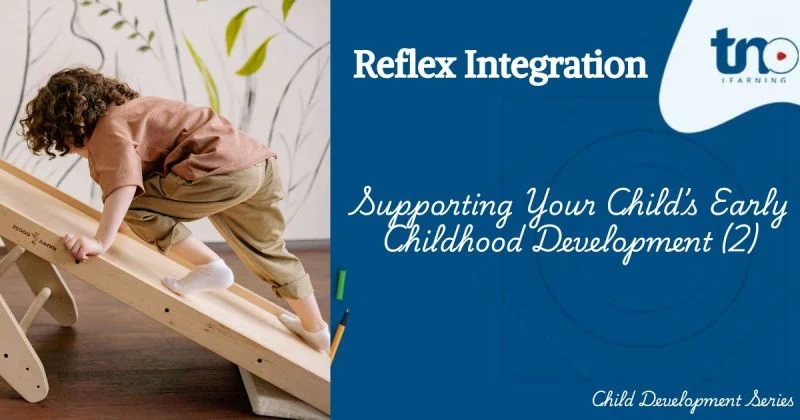
Primitive reflexes, also known as infant, primary, or neonatal reflexes, begin developing before birth. These reflexes play an essential role in early movement and survival. As a child’s brain and nervous system mature, these early reflexes are gradually inhibited and integrated, allowing the child to develop greater control of posture, movement, and voluntary motor skills.
Most primitive reflexes are expected to become integrated during early childhood. When some remain active beyond the expected developmental period, they may interfere with areas such as movement, sensory processing, attention, learning, and emotional regulation.
The foundations supported by reflex development
- Postural control and coordination
- Eye movement and visual control
- Spatial awareness
- Attention and concentration
- Sitting still and maintaining a stable posture
- Impulse control
- Emotional regulation
- Sensory processing
- Readiness for learning
Children need opportunities to move, explore, practise, and master their bodies. When we expect a child to perform skills they are not developmentally ready for, learning can become unnecessarily stressful.
Understanding where a child is developmentally can help parents provide the right support at the right time instead of simply expecting the child to “try harder.”
Consider having your child’s reflexes assessed around 3–5 years of age, particularly if you have concerns about movement, attention, coordination, sensory processing, emotional regulation, or school readiness.
An assessment can help identify areas that may benefit from targeted developmental activities and support, ideally before the demands of formal schooling increase.
The goal is not to label a child. It is to understand the child and provide the developmental support required to thrive.