After completing my MSc Psychology, I am at a childcare centre observing children’s behaviour and their cognitive, social, physical, and communication development. I am presently working with preschoolers aged 2.5 to 4 years. One observation felt especially worthy of sharing with parents.
Three four-year-old preschoolers — Ra, Nh, and Ni — were having fun together, moving in circles as they sang “Ringa Ringa Rosie.” At the end of the song, they all dropped down as they said, “we all fall down.” They laughed and repeated the play several times.
During one chorus, Nh and Ni bumped their heads. Nh was upset and blamed Ni for the accident. Ra tried to calm Nh down; she hugged her and continued to soothe her. Ni looked sad and left out. I wanted to prompt Ra about Ni’s feelings. I felt the urge to soothe Ni myself, but the observation would have been interrupted if I interfered, so I waited.
Ra turned, rubbed Ni’s head, gave her a warm hug, and soothed her too. When she noticed she had calmed both children, she cheerfully said, “Let’s play again!” Nh and Ni jumped up with excitement and joined Ra; they happily continued their play.
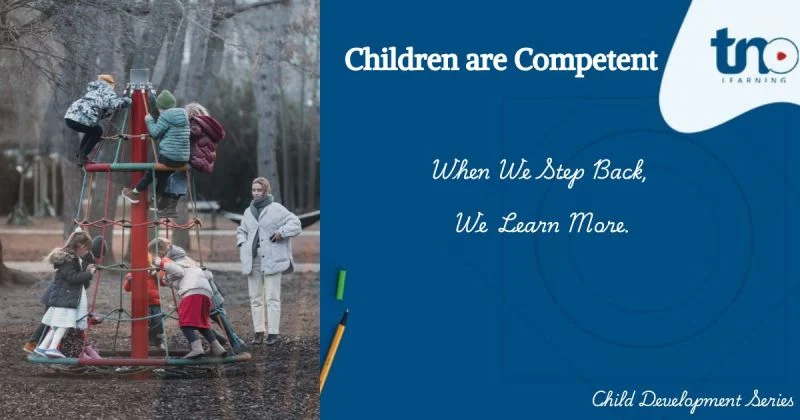
It was the finest moment of emotional intelligence I have recorded. Ra’s competence is not every preschooler’s competence, but several other children in the class demonstrate similar empathy, emotional awareness, and problem-solving at just four years old. The preschoolers confirmed the statement from How Does Learning Happen? that “Children are competent, capable of complex thinking, curious, and rich in potential.”
I would not have seen this if I had interrupted. How often, as parents and educators, do we step in immediately to resolve children’s conflicts? Adult support is sometimes necessary, but this experience reminded me that children are often far more capable than we give them credit for. Given the opportunity, they can demonstrate empathy, regulate emotions, solve problems, and repair relationships in remarkable ways.
My hope is that this observation encourages us to slow down, observe more intentionally, recognise children’s competencies, and create opportunities for those strengths to flourish. Sometimes the greatest lesson is found not in what we teach children, but in what they teach us when we give them the space to do so.