Everyday interactions — verbal or nonverbal — with a child are learning opportunities for both the child and the parent or educator.
I was working at a childcare centre and needed to clean a preschooler after she had used the toilet. I cleaned her with a tissue and told her to pull up her trousers. She looked at me and slowly began to pull them up. I noticed reluctance in her body language and asked whether I had cleaned her properly and whether everything was okay. She stopped and stood still.
I was confused, so I called an educator. The educator explained that I needed to hand the preschooler a tissue so she could clean herself first, then I would put on gloves and use a wet wipe to clean her, after which she would pull up her trousers and wash her hands. I would then remove my gloves and wash my hands. When I corrected the procedure, the preschooler smiled, and I sensed her relief and happiness.
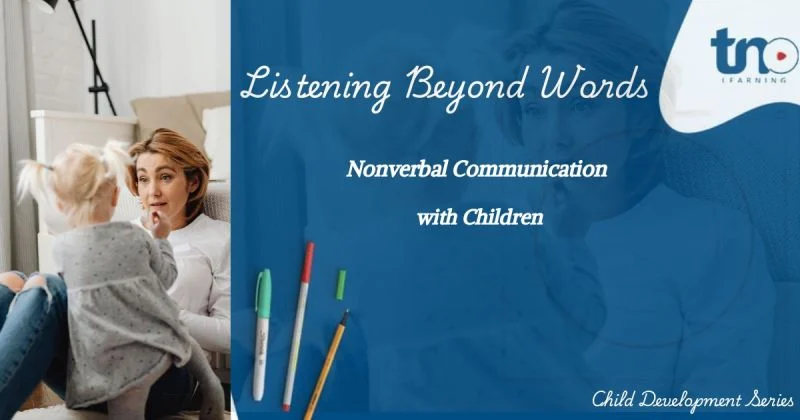
A child may not have the vocabulary or confidence to express their point. Parents and educators need to engage actively with children’s nonverbal cues.
Ways to listen beyond words
- Understand that behaviour communicates: children may express feelings, needs, or concerns through behaviour rather than words.
- Recognise nonverbal cues: notice when a child’s actions do not match what is being said, because this may indicate an unmet need or concern.
- Be patient and attentive: give children time to communicate in their own way without rushing or making assumptions.
- Use observations to guide your responses: adapt communication and caregiving based on the child’s nonverbal behaviour.
- Reflect and adapt your practice: learn from each interaction and apply new knowledge to future communication.
Nonverbal communication plays a vital role in understanding and responding to a child’s needs. Taking time to observe, listen, and respond thoughtfully helps children feel respected, safe, and understood.